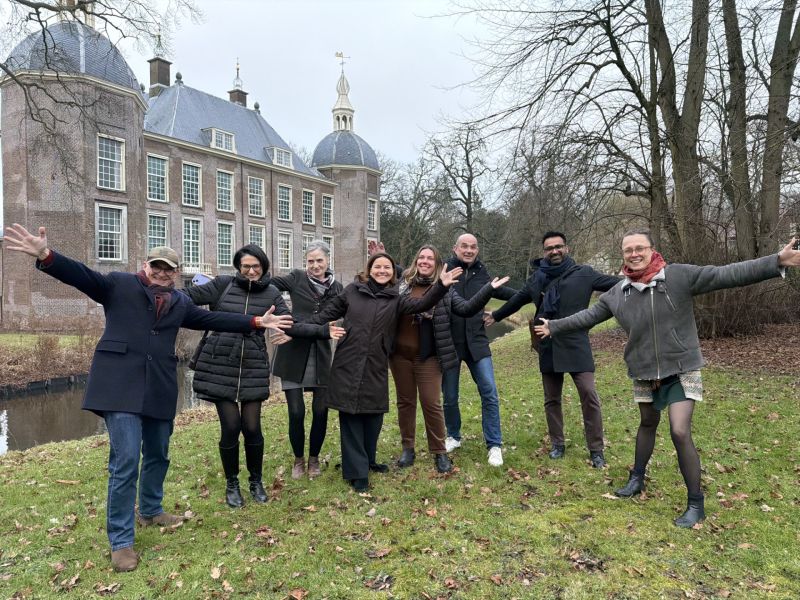
The Meeting of the Core Members ofthe Traumatic Stress Network ofEuropean College of Neuropsychopharmacology (ECNP).
This week, I had the honour of joining a delegation of the Czech Government, led by Pavel Bém, a key figure in Czech drug policy reform, to meet stakeholders involved in mental health reform in Ukraine. Alongside discussions on innovation, we also learned from the ‘How Are You programme’ – initiated by First Lady Olena Zelenska – which provides a vital national framework for psychosocial support and public mental health.
The focus of this mission was clear: how additional innovative drug treatments for PTSD, including ketamine and MDMA, might be introduced responsibly within structured clinical, scientific, and regulatory frameworks, while building consortia aligned with EU and other international funding schemes.
The programme was intense. Across Kyiv, Dnipro, and Lviv, we held high-level round tables with more than 50 representatives from ministries, hospitals, regional administrations, legislative bodies, and clinical institutions. Discussions were direct, pragmatic, and future-oriented, with a careful genuine openness to innovation grounded in evidence, regulation, and European standards.
Context inevitably shaped these conversations. In Kyiv, discussions continued in a bomb shelter. In Dnipro, meetings took place while the region was under attack. In Lviv, we concluded at Kulparkiv Psychiatric Hospital – a setting that underscored both the historical burden and the present urgency of mental health reform. The surroundings were at times cold and dark, yet the exchanges were engaged, strategic, and remarkably open.
The visit also raised deeper questions. Mental health needs in Ukraine are expected to rise substantially, while the end of the war remains uncertain. Alongside discussions on novel treatments, pressing challenges stood out: training clinicians in assessment and triage, scaling up evidence-based care, building sustainable pathways, and strengthening infrastructure under ongoing threat.
This leads to an essential question: do Ukrainians primarily need new treatments now, or the capacity and systems to deliver care safely and at scale over time?
Innovation is not optional, neither is sequencing. Advanced interventions only make sense when embedded in robust training, regulation, and research infrastructure.
The Czech experience offers valuable lessons, particularly around regulatory pathways and European collaboration. Yet Ukraine adds a layer: no physical shelter fully protects against the psychological impact of prolonged uncertainty.
Despite this, there were moments of hope, quiet encounters, visible reconstruction, resilience being built system by system. I leave with deep respect for those working under extraordinary pressure, and gratitude to the Embassy of the Czech Republic in Ukraine, the Consulate, and the partners who make this collaboration possible.
Viktor Chvátal Oleh Fitkalo Oleh Orlov Eva Mária Kotorová Oksana Zbitnieva Marta Pyvovarenko Oksana Gryshchenko Iryna Frankova Olena Maidannyk Tomas Sadilek, many more!